


Strategic partnership accelerates adoption of advanced water treatment technology across Latin America’s most demanding water conditions
Facing growing water scarcity and deteriorating water quality across the agricultural sector, Copeval and AQUA4D have announced a strategic alliance designed to accelerate the adoption of advanced water management technology, increase agricultural productivity, and reduce operational costs.
Why This Partnership Matters
Chile faces one of the region’s most challenging water scenarios:
Water Availability Crisis:
- – 70%+ of national territory classified as arid or semi-arid
- – Sustained decrease in precipitation across all regions
- – Aquifer depletion in valleys critical for agricultural production
- – Competition for limited freshwater resources
Water Quality Challenges: Across the Norte Chico, Central Zone, and Norte Grande productive basins, water quality has become a critical limiting factor. High electrical conductivity and mineral concentrations directly damage soil health and crop performance—making productive agriculture increasingly difficult without technological intervention.
The Strategic Vision
“At Copeval, we believe Chile’s agricultural future requires concrete, verifiable, and sustainable technological solutions. AQUA4D® meets all of those criteria. We’re excited to bring this technology to our clients, especially in a context where water scarcity and water quality challenges are intensifying,” said Jorge Lorenzoni, General Manager of Copeval.
Felipe Villarino, CEO of AQUA4D®, reinforced the strategic fit: “Chile is a world-class export agriculture country operating under extreme water conditions. The Copeval alliance allows us to reach producers who need this solution now. The results we’ve achieved in Chilean projects are as robust as those we’ve validated in Europe or North America: water interacts better with soil, plants respond better, and producers achieve more with less water.”
Proven Technology with Established Track Record
AQUA4D® physical water treatment technology has been operational in Chile since 2019, with more than 100 active projects across Latin America delivering field-validated results.
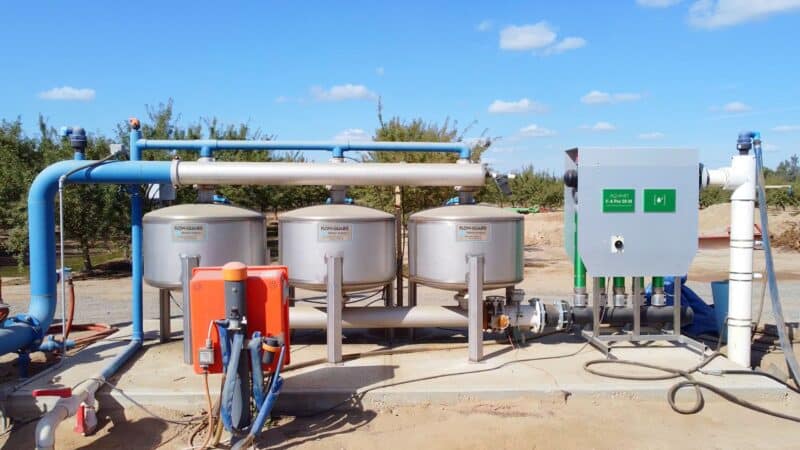
How the Technology Works: The system modifies water’s physical properties—without chemicals or additives—to improve its interaction with soil. This enhancement optimizes water use efficiency while reducing negative salinity effects, allowing agricultural operations to maintain or improve productivity despite challenging water sources.
Measurement Methodology: All AQUA4D projects in Chile are evaluated using rigorous, on-site measurement protocols including:
- – Soil moisture sensors
- – Electrical conductivity probes
- – Foliar analysis
- – Plant water potential measurements
This data-driven approach ensures results are verified and measurable, not assumed.
Since its arrival in the country in 2019, AQUA4D has developed projects in avocado, vineyards, citrus, vegetables, blueberries, table grapes, walnut trees and forest nurseries, with notable successes including:
- – Vegetables in the Coquimbo Region showed a 46% reduction in electrical conductivity compared to control plots, a 38% decrease in foliar sodium absorption, and potential savings of up to $370,000 per hectare in fertilization.
- – Vineyards in the Metropolitan Region achieved an 11% water savings, a 19% reduction in electrical conductivity in the root zone, and improved yields compared to control plots.
- – Avocado orchards in the Valparaíso Region saw a 23% reduction in irrigation time and an expansion of 12 hectares in the productive area using the same amount of water.
The AQUA4D-Copeval model offers a path to success: proven technology integrated through trusted local partners, enabling producers to maintain competitiveness while ensuring long-term sustainability.
Chile
Water-Smart Agriculture
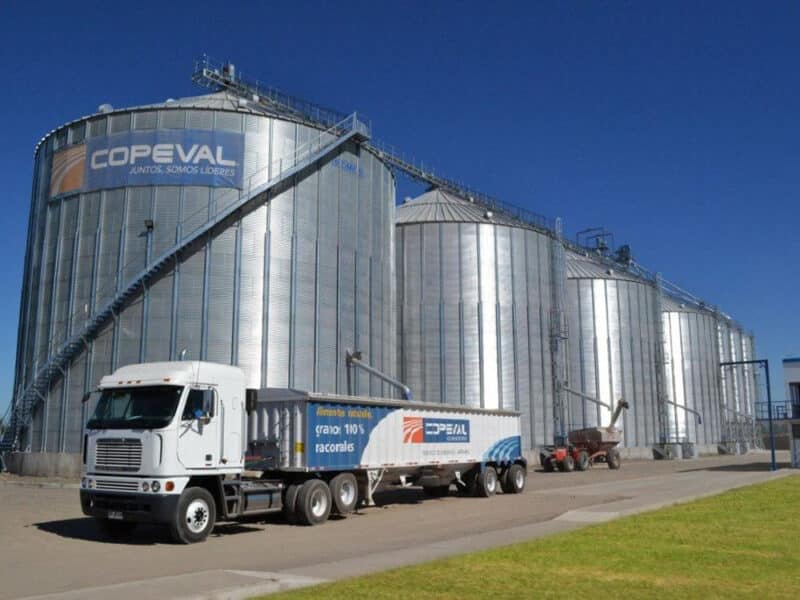
“At Copeval, we believe Chile’s agricultural future requires concrete, verifiable, and sustainable technological solutions. AQUA4D® meets all of those criteria. We’re excited to bring this technology to our clients, especially in a context where water scarcity and water quality challenges are intensifying,”
– Jorge Lorenzoni, General Manager of Copeval.